Showing posts with label Fauna Indonesia. Show all posts

Tuesday, October 5, 2010

Wallacea Fauna

The Wallacea biogeographical zone represents the transition between the Sundaland in the west and the Australasian region to the east. This area includes approximately 338 494 square kilometers, divided into several small islands in total. Because of its geography, diverse and from this region include many endemic species and unique flora and fauna in a number of different ecological regions, mountains and plains of Sulawesi, North Maluku, divided Buru Seram in the Moluccas and the Sunda Islands (Sumba an ecoregion in his own right), Timor and the islands in the Banda Sea.


Mammals
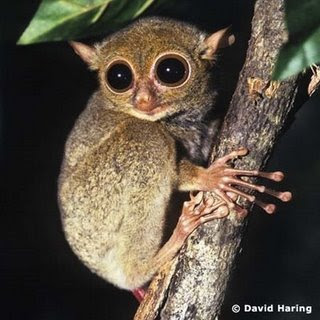
The Wallacea has a total of 223 species of native mammals. 126 of them are endemic to this region. An astonishing 124 species of bats in this area. Sulawesi, the largest island in this area has the largest number of mammals. 136 species to be exact, including 82 species and a quarter of the genera are endemic. notable species such as anoa babirusa and live on this island. At least seven species of monkeys, and at least five species of tarsier are also unique to this island.

Birds
<
650 bird species can be found in Wallacea, including 265 species are endemic. Among the 235 species represented, 26 of them endemic. 16 genera are restricted to Sulawesi and surrounding islands. Approximately 356 species including 96 endemic bird species live on the island of Sulawesi. The first is the Maleo, a bird now threatened, as are full in the Wallacea.

Reptiles and Amphibians
With 222 species, of which 99 are endemic to Wallacea has a high diversity of reptiles. These include 118 species of lizards, of which 60 are endemic, 98 species of snakes, of which 37 are endemic, and five species of turtles, two of which are endemic, and a kind of crocodile, alligator Pacific Indus. Three genera endemic snake found only in this region: Calamorhabdium and Rabdion Cyclotyphlops. One of the most famous reptile Wallacea is probably the Komodo dragon, which is known only from the islands of Komodo, Padar, Rinca and the western tip of Flores.

58 native amphibian species in Wallacea, of which 32 are endemic. They are a fascinating blend of Indo-Malaya and Australasia frog tag.

Fish
There are about 310 species of fish in rivers and lakes Wallacea recorded, 75 species are endemic. Although little is known about the fish in the Moluccas and the Sunda Islands, 6 species are recorded as endemic. In Sulawesi, there are 69 known species of which 53 are endemic. Malili lakes in the south of Sulawesi, with its complex telmatherinid deep lakes, streams and rivers, at least 15 endemic fish, what two of them endemic genera, three endemic latipes, endemic two laces and seven endemic gobies.

Invertebrates
There are about 82 species of butterfly wings of a bird in Wallacea included are 44 of them endemic. 109 species of beetles Tigers also recorded in this region, 79 are endemic. One of the most striking is probably the largest in the world of bees in North Maluku, an error, in which women reach up to four inches long. This species nests of bees inhabited community in the termite in the trees in lowland forests.

About 50 endemic mollusks, three species of endemic crayfish, and a number of endemic species of shrimp are also known in the Wallacea.

Sunday, October 3, 2010

Sundaland Fauna

These include Sumatra, Java, Borneo and the surrounding smaller islands, they share similar characteristics to the Asian fauna. During the ice age, Laurasia after the break, the main Asian continent has brought to the Indonesian archipelago name.
On the other hand, a decrease in sea level in Asia has allowed animals to migrate Sundaland. Consequently, there are larger species such as tigers, rhinos, orang-utans, elephants and leopards in this region, although some species are considered endangered. The Makassar Strait between Borneo and Sulawesi and Lombok Strait between Bali and Lombok, which is the line separator Wallace, marks the end of the Sundaland region.

Mammals
Sundaland has a total of 381 species of mammals. 173 of them are endemic to this region. Most of these species are threatened with extinction. Two species of orang-utan, Pongo pygmaeus are (orangutan of Borneo) and Pongo abelii (Sumatran orangutan) listed in the IUCN Red List. Other mammals such as the proboscis monkeys of Borneo, Sumatra and Java rhinoceros rhinoceros are known to extinction.

Birds
According to Conservation International, a total of 771 bird species regularly in Sundaland. 146 of them are endemic to this region. Java and Bali, at least 20 endemic species such as the Star of Bali and Java plover.

Reptiles and Amphibians
An astonishing 449 species in 125 kinds of reptiles is estimated to live in Sundaland. 24 genera and 249 species are endemic. Three families of reptiles are endemic to this region: Anomochilidae and Xenophidiidae Lanthanotidae, the latter of the Borneo earless monitor, a very rare and little known lizard represented. About 242 species in 41 genera of amphibians live in this region. 172 species of them, including six endemic genera Ceciliano.

Fish
Nearly 200 new species are discovered in the last ten years in this region. About 1,000 species of fish are known to live in rivers, lakes and swamps Sundaland. Borneo has about 430 species, 164 of them endemic. Sumatra has 270 species, of which 42 are endemic. The known gold arowana is one of the best examples of fish in this region.

Wednesday, September 29, 2010

Labuan Bajo, Hunting Comodo's Picture & Great Dive Spot


Labuan Bajo is a fishing town located on the western coast of Flores in the Nusa Tenggara region of Indonesia. Labuan Bajo, also spelled Labuhanbajo, is a city at the tip of Flores Island in Indonesia. It is the launching point for trips to Komodo Island and Rinca Island to see Komodo dragons and the surrounding sea is idealic for diving and snorkeling.
Nearby Seraya Island is a great opportunity to do some diving and snorkeling and every evening at Kalong Island thousands of flying fox bats put on an amazing display.

Perama tour   Hunting Komod by camera trip, it a trip started from Lombok, it leaves every six day from lombok and also the other way around. with price for cabin is around Rp.2,600,000 or you can choose a deck class for Rp.2,000,000 where you get to sleep with a thin carpet, it is not really an open water because it coasting along the coastal line and most importantly it has the navigation and safety equipment. It takes you to visit some spots along the way to Labuan Bajo and Komodo.


Komodo National Park encompasses a lot of water and islands west of Labuanbajo. If you want to go to Rinca or Komodo islands, or dive in the park you will have to buy a 3 day park pass for US$15. Money from such user fees goes into conservation efforts.

One of the more spectacular displays of nature in the area is at Kalong Island (Indonesian: Pulau Kalong; also spelt Kalung), which literally means "Flying Fox Island." The name is quit appropriate as the island is home to thousands of Kalong, or giant flying fox bats. Boats to Kalong can be chartered from Labuanbajo for around $30 for a return ride, including a snorkeling stop at a nearby island before you reach Pulau Kalong. Your boat will situate itself next to the mangrove island and at dusk literally tens of thousands of flying foxes emerge from the mangrove island and move over your boat towards Rinca Island. For the entire colony to emerge will take roughly twenty minutes of continuous waves of bats passing over your boat. The boat ride to/from Labuanbajo will take roughly one hour.

Kanawa Island (Indonesian: Pulau Kanawa) is considered as one of south east Asia's most idyllic islands, fully surrounded by spectacular reef with thousands of fish species, turtles, corals and reef sharks, sometimes it is possible to see some mantas just around the arrival jetty. Kanawa island is just 10 km away from Labuan Bajo (about 1hr with a local boat or 10 minutes with speed boat) and located just at the boarders of Komodo National Park.

Seraya Island  (Indonesian: Seraya Kecil or Seraya Pulau) is an idyllic island and a great opportunity to get away from civilization and do some snorkeling and diving. Seraya is little more than a small, arid island outside of the Komodo National Park with a few bamboo huts for tourist lodging, a restaurant, and some villagers who let their goats graze on vegetation. The island’s cove is protected from the sea providing calm and clear water for snorkeling. At low tide the coral is exposed and local fishermen walk on the reef in search of prey. Rowboats can be rented and taken to nearby islands for snorkeling and diving.


Rinca Island  (Indonesian: Rinca Kecil or Rinca Pulau) is a more convenient place to see Komodo Dragons than Komodo island. Some dive operators might be convinced to combine a stop at the island with a days diving. There are big dragons that are often right in front of the pier when people arrive.

Scuba Diving within the park is excellent, probably one of the best in the world. Mostly because of higher biodiversity than any elsewhere in the world. There are three main dive operators that offer day dives as well as live aboard opportunities: Bajo Dive Club, Dive Komodo, and Reef Seekers. Be aware that the currents at some sites can be quite strong.

Saturday, September 25, 2010

The Origin of Indonesian Fauna (Wallace Line)


The origin of fauna in Indonesia is heavily affected by geographical and geological events on the Asian continental landmass and the Australasian continental landmass (now Australia).
The present Irian island (New Guinea) was connected with the present Australia continent. forming a supercontinent called the southern supercontinent Gondwana.

The influence of the Asian continental landmass, on the other hand, was the result of the reformation of the Laurasia supercontinent, which existed after the breakup of Rodinia around 1 billion years ago. Around 200 million years ago, the Laurasia supercontinent split completely, forming Laurentia (now America) and Eurasia continents.

In the nineteenth century, Alfred Russel Wallace proposed the idea of the Wallace Line, a notional line dividing the Indonesian archipelago into two regions, the Asian zoogeographical region (Sundaland) and the Australasian zoogeographical region (Wallacea). The line runs through the Malay Archipelago, between Borneo and Sulawesi and between Bali and Lombok.  A second line, lying east, known as the Webber Line, has also been proposed to separate between "transition species" and species of Australian origin. Although the distance from Bali to Lombok is relatively short, only about 35 kilometres, the fauna distribution is still affected by the line. For example, a group of birds would refuse to cross even the smallest stretches of open water.


Sundaland includes Sumatra, Java, Borneo  and the smaller surrounding islands, share similar characteristics with Asian fauna. During the ice age, after the Laurasia break up, the main Asian continent was connected with the Indonesian archipelago. Moreover, a low sea level enabled animals from the Asian mainland to migrate to Sundaland. As a result, large species such as tiger, rhinoceros, orangutan, elephant, and leopard exist in this region, although some species are categorised as endangered species. The Makassar Strait, between Borneo and Sulawesi, and the Lombok Strait, between Bali and Lombok, which is the Wallace Line separator, mark the end of the Sundaland region.


The Wallacea represents the biogeographical transitional zone between the Sundaland to the west and the Australasian  zone to the east. This zone covers of about 338 494 km² land area in total, divided in multiple small islands. Due to its distinct and varied geography this region contains many endemic and unique species of flora and fauna and has been divided into a number of distinct ecoregions; the mountain and lowland areas of Sulawesi, North Maluku, Buru and Seram in Maluku, the Lesser Sunda Islands (with Sumba a distinct ecoregion in its own right), Timor, and the islands in the Banda Sea.


The fauna from Papua region comprises a huge diversity of mammals, reptiles, birds, fishes, invertebrates and amphibians, many species of which are of Australasian origin. Ecoregions here include; the mountains of Bird's Head Peninsula West Papua, the lowlands of West Papua and Papua, the Biak Islands, Yapen  island, the lowlands of New Guinea's northern coast, the mountain ranges behind the northern coast, medium and high elevations of the New Guinea Highlands, the lowlands and the swamplands of the southern coast, and finally areas of mangrove swamp scattered around the coast.

Friday, September 24, 2010

Fauna of Indonesia


The Fauna of Indonesia consists of a high level of biodiversity due to its vast-size and tropical archipelago make-up. Indonesia divides into two ecological regions; western Indonesia is more influenced by Asian fauna, and the east is more influenced by Australasian. The Wallace Line—in fact, more an area known as Wallacea—notionally divides these two regions.
This unique blend of fauna in Indonesia is also affected by the diverse range of ecosystems, including beaches, sand dunes, estuaries, mangroves, coral reefs, sea grass beds, coastal mudflats, tidal flats, algal beds, and small island ecosystems.


Ecological issues have appeared in the nation due to the rapid industrialisation process and high population growth, resulting in lower priority level to preserve the ecosystems. The situation has worsened by illegal logging activity, in which resulting deforestation; while other problems, including high level of urbanisation, air pollution, garbage management and waste water services also contributing to the forest deterioration.


Although 45% of Indonesian region is still inhabited and covered by tropical forests, high growth of Indonesian population, with its industrialisation, has slowly affected the existence of fauna in Indonesia. Moreover, wildlife trade has also worsened the condition of Indonesia's charismatic fauna, including rhinoceross, orangutans, tigers, and certain species of amphibians.  Up to 95% of animals sold in markets are taken directly from the wild, rather than from captive breeding stock; and more than 20% of the animals died in transportation. As of 2003, The World Conservation Union lists as endangered 147 mammals, 114 birds, 91 fish and 2 invertebrate species.


Some of the richest habitats have been protected since the early 20th century under Dutch Colonial law. Indonesia's first national parks have been established in 1980, and the network has been rapidly growing since, reaching a total of 50 declared national parks in 2009. Six of these are also World Heritage Sites and 3 are wetlands of international importance under the Ramsar convention.

Related Posts Plugin for WordPress, Blogger...